
Community Slate
The process of urban planning in city development currently lacks transparency, has a limited amount of public involvement, and is slow to utilize our current technologies. The city wants to involve the public in the decision-making process, but the current methods make it difficult to engage a broader spectrum of community members. Project delays due to public opposition can increase project expenses exponentially. Creating a better dialogue between city planners and the public would reduce the cost of development and enable people to have a voice in their community.
Community Slate is a platform for city planners to inform neighborhoods about development projects and gain feedback throughout a project timeline. Its three parts are:
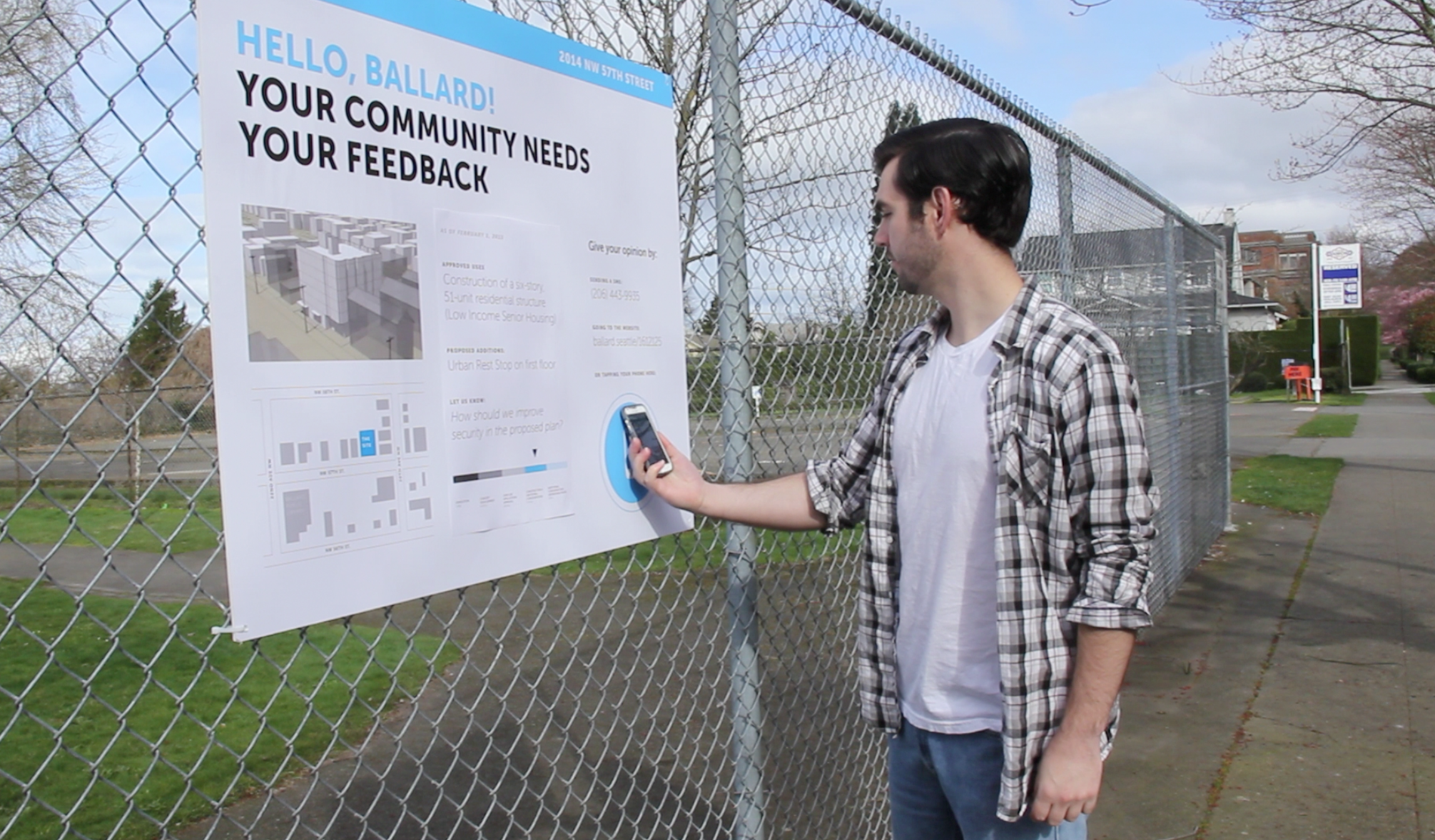
An informative, updatable, printed development sign that connects pedestrians to a mobile website with an NFC tag.
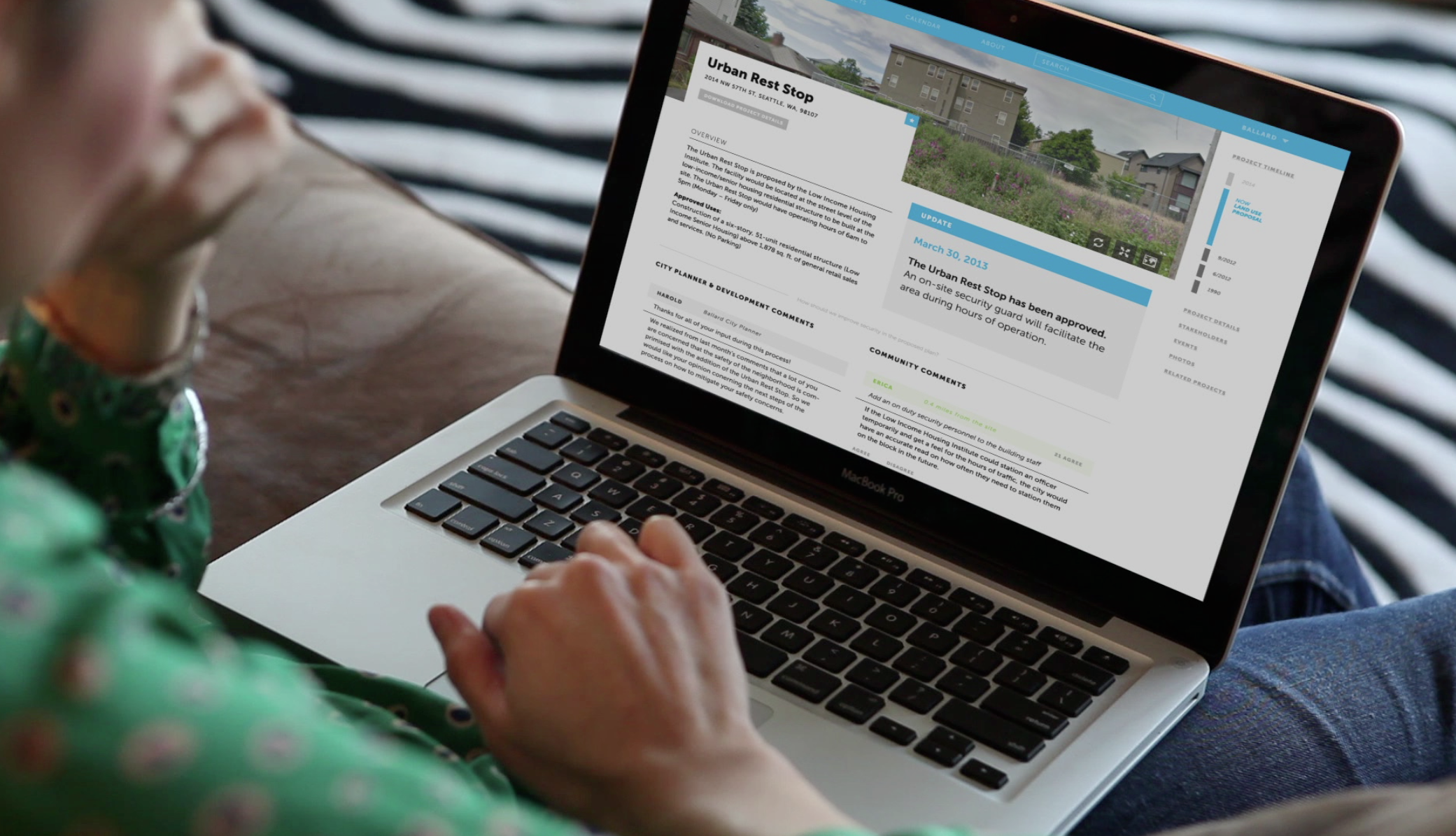
A desktop website that presents and updates development information, and summarizes public opinion about development projects in a neighborhood. The site allows people to answer specific questions posted by city planners or give general feedback.
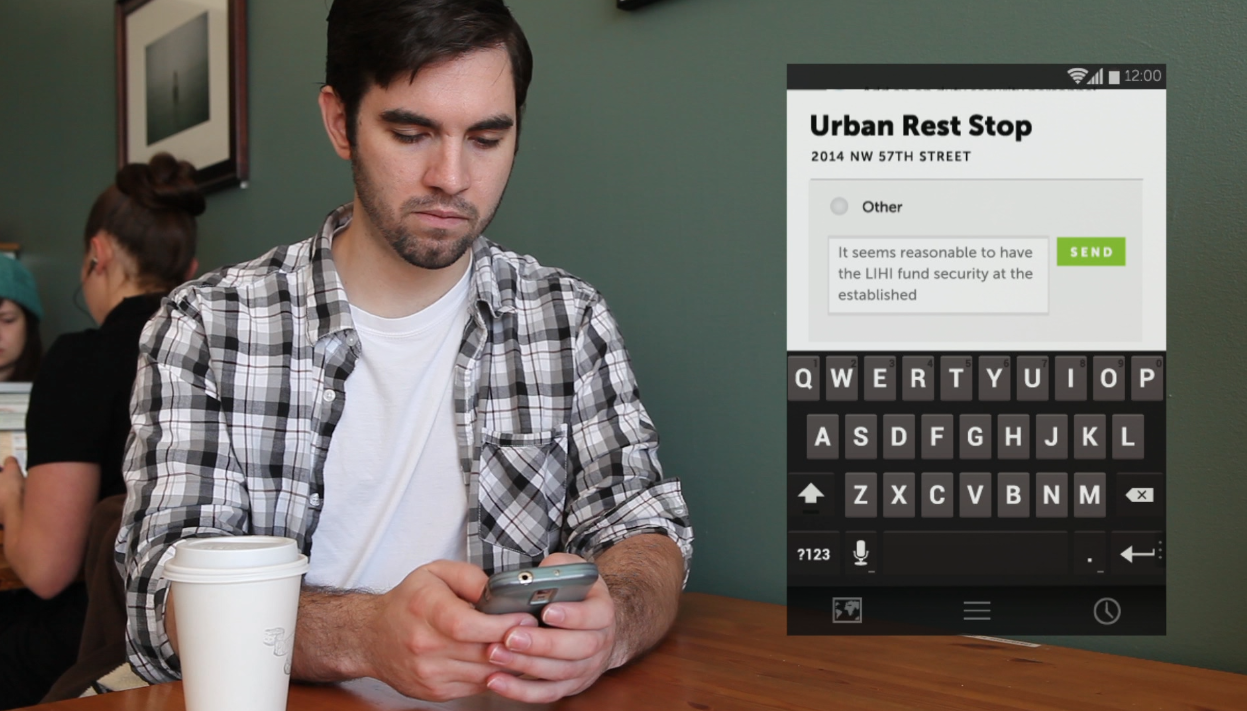
A mobile website, similar to the desktop site, that can be connected to from a mobile maps application layer that shows development locations.
By improving communication between local governments and the public in urban planning processes we hope that Community Slate can:
Transparently communicate when and how public input is needed so that the process can be more predictable and easier to take part in. This transparency would also open the development process up to critique by those who find it limiting.
Lower the barriers to participation so that more people are included in decision making. This would help to make the planning process more inclusive so that decisions could reflect overall public opinion.
Gather and summarize public opinion more efficiently and democratically by asking quantifiable questions and by allowing participants to vote for comments they feel strongly about by pressing ‘agree’ or ‘disagree.’
Allow people to see what others in their neighborhood think about development issues so that they would be encouraged to get involved and stay informed about projects.
Our hope is that all of these factors would contribute to a more transparent, efficient planning process that could both save the city and investors money in delayed costs, and better inform the public and incorporate their concerns into planning decisions. Community Slate enables people to have a say in the design of the urban environment that they inhabit.
0 comments